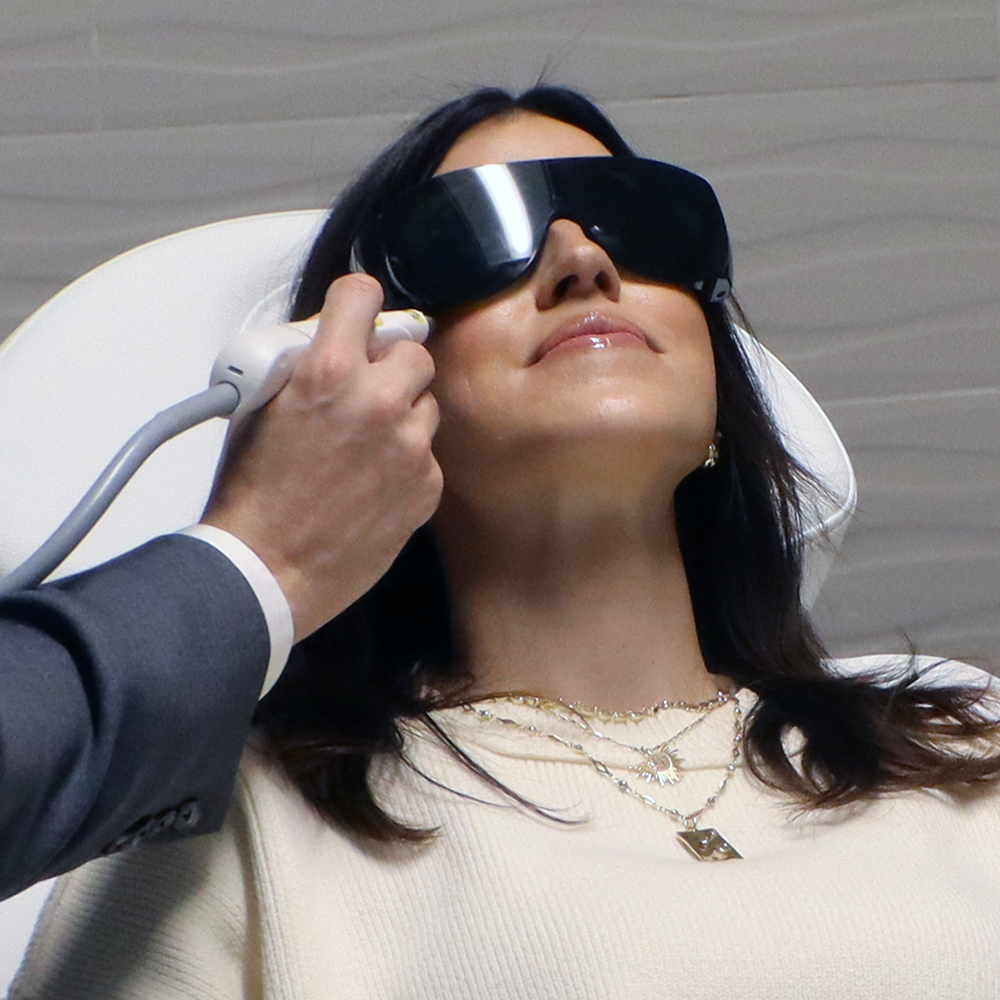

Eye doctor treating dry eye patient

TREATMENT OPTIONS

LipiFlow®
We apply heat and massage the inside of your eyelids. This safe and effective tool can unclog your meibomian glands.
Equinox Low-Level Light Therapy
This quick and painless procedure gently warms your eyelids to release the natural flow of oils.
Intense Pulse Light
This painless treatment sends gentle pulses of light to thick secretions on your eyelids.
Eye Drops
When your real tears aren’t functioning properly, we often recommend OTC eye drops like Retaine MGD, but we may prescribe medications.
Specialty Contact Lenses
Specialty contacts like scleral and RGP lenses are great alternatives to glasses and traditional contacts and can also help with dry eye symptoms. In addition to keeping your eyes hydrated, specialty lenses protect your cornea from external irritants.
Radiofrequency (Therapy
This non-invasive, in-office procedure uses thermal energy to treat dry eye caused by Meibomian Gland Dysfunction (MGD). RF melts blocked oils, reduces inflammation and improves tear quality, often resulting in long-lasting relief.
Dry eye therapy doctor.

Dry Eye Causes

The key to getting long-lasting relief for your dry eye is pinpointing its root cause. Since there are many types of dry eye disease, our specialists will look for different causes, including:

  • Meibomian gland dysfunction

  • Health issues like lupus, diabetes, Graves’ disease and rheumatoid arthritis

  • Certain medications

  • Frequent digital screen usage

  • Poor blinking habits

  • Contact lenses
  • Dry environments

Our Dry Eye Specialists

Terry N. Null, OD
Terry N. Null, OD
Fishers
Anjali Palvia Shah, OD
Fishers
Collin M. Rush, OD
Collin M. Rush, OD
Greenwood
Deanna Rankin, OD
Deanna Rankin, OD
Greenwood

FAQ

Dry Eye

Dry Eye disease occurs when your eyes don’t produce enough tears or your tears evaporate too quickly, resulting in irritation, redness, and blurred vision. It’s a common condition that can affect your daily comfort, visual clarity and overall eye health.

Symptoms may include:

  • Dryness or excessive watering
  • Burning or stinging sensations
  • Grittiness or the feeling of something in the eye
  • Redness and irritation
  • Fluctuating or blurry vision
  • Sensitivity to light
  • Eye fatigue, especially during screen use

Dry Eye is diagnosed through a detailed evaluation that includes a symptom review, a slit-lamp exam and specialized tests to assess tear film quality, quantity and gland function. Advanced imaging helps identify underlying causes, such as gland blockages or inflammation.

Our treatment options are based on the root cause and may include:

LipiFlow® Thermal Pulsation: Gently heats and massages the eyelids to clear blocked meibomian glands

Low-Level Light Therapy (LLLT): Uses gentle LED energy to reduce inflammation and improve gland function

OptiLight® IPL and OptiPLUS RF: Advanced therapies to reduce inflammation and rejuvenate the eyelid area

Prescription and eye drops

Scleral or specialty contact lenses

Lifestyle modifications and nutritional support

Think of it as a spa day for your eyes.

MGD is a leading cause of dry eye and occurs when the glands in your eyelids become clogged and can’t secrete enough oil into your tears. Without this oil layer, tears evaporate too quickly, causing dryness and irritation. Specialized treatments like LipiFlow and LLLT (Low-Level Light Therapy) can restore proper gland function.

No. Treatments like LipiFlow, LLLT and OptiLight are non-invasive and generally well-tolerated. Most patients find the procedures relaxing and comfortable in our Dry Eye Spa.

Many patients notice some relief within a few days to weeks, depending on the treatment and severity of symptoms. Full results often improve over time with consistent care and follow-up.

Possibly. In-office treatments help address the underlying causes of dry eye, but some patients may still benefit from artificial tears or prescription drops to manage occasional symptoms, especially during flare-ups.

Yes. Without proper care, dry eye can become chronic and lead to more serious complications such as corneal damage, increased risk of eye infections, and reduced quality of life. Early treatment helps prevent long-term issues.

Prolonged use of computers, smartphones, and tablets reduces blink rate, which can dry out the surface of the eye. Taking regular breaks (the 20-20-20 rule), adjusting screen settings, and proper lighting can help minimize strain.

Yes. Contacts can reduce oxygen flow and interfere with tear film stability, making Dry Eye symptoms worse. Specialty contact lenses, like scleral lenses, are available to help protect the eyes and maintain moisture for patients with Dry Eye.

Yes. Dry, cold winter air and indoor heating systems can reduce humidity and worsen symptoms. Spring allergy season may also trigger eye inflammation. Many patients experience flare-ups in both winter and early spring. However, it’s important to know the difference between Dry Eye disease and allergic eyes.

Yes. Conditions such as diabetes, thyroid disorders, Sjögren’s syndrome, lupus and rheumatoid arthritis can contribute to Dry Eye. Certain medications, including antihistamines and blood pressure drugs, can also worsen symptoms.

Helpful strategies include:

  • Taking screen breaks to blink more often
  • Using a humidifier in dry environments
  • Wearing sunglasses to block wind and UV rays
  • Staying hydrated
  • Eating omega-3 rich foods or taking supplements (if recommended by your doctor)
  • Practicing proper eyelid hygiene

Yes, but choose hypoallergenic, oil-free products and avoid applying makeup too close to the lash line. It’s also important to make sure you aren’t using expired make-up. Clean your eyelids thoroughly each day to prevent gland blockages and irritation.

No referral is necessary, but you will need to book a comprehensive eye exam with us first to determine if Dry Eye treatment is the right option for you. Our doctors will then guide you through diagnosis and recommend a personalized treatment plan.

Schedule a comprehensive eye exam at one of our convenient locations. We will begin with a thorough evaluation to identify the root cause of your symptoms and develop a treatment plan designed to bring lasting relief.

Eye doctor treating patient with eye drops

Why VisionQuest Eyecare

For Your Dry Eye Treatment

Artificial tears do not address the root cause of Dry Eye. We specialize in advanced therapies to ensure that our patients receive the highest level of care.
  • Our Doctors are highly trained in Dry Eye diagnosis and treatment

  • Our Dry Eye Spa offers the latest in DryEye treatment

  • We create personalized treatment plans based on your unique symptoms