


Eye Exams
At VisionQuest Eyecare in Fishers, Indiana, we are committed to safeguarding your vision through thorough and comprehensive eye exams. Our skilled optometrists employ state-of-the-art technology and advanced techniques to provide you with exceptional eye care. Whether you are noticing changes in your vision, need a new prescription, or wish to ensure your eyes remain healthy, VisionQuest Eyecare is your reliable partner for eye exams in Fishers, Indiana.
The Eye Exam Process
Step 1: Medical and Vision History Review
Your eye exam at VisionQuest Eyecare in Fishers starts with a comprehensive review of your medical and vision history. Our optometrists will collect information about any pre-existing conditions, medications, or vision concerns that could influence your eye health. We encourage you to share any symptoms or issues you’ve been experiencing, as this information is essential for an accurate diagnosis.
Step 2: Visual Acuity Test
Next, we perform a visual acuity test to measure the sharpness of your vision. This involves reading letters on a chart at various distances, helping us determine if you need corrective lenses and the precise prescription strength required for clear vision.
Step 3: Refraction Assessment
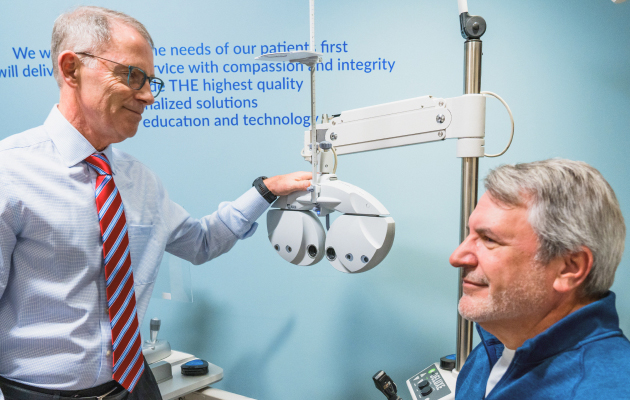
During the refraction assessment, our optometrists use a phoropter to measure how light bends as it passes through your eye. This test helps determine the exact prescription for your glasses or contact lenses, ensuring you achieve the clearest vision possible.
Step 4: Eye Health Evaluation
We conduct several tests to evaluate the overall health of your eyes, which may include:
- Slit-Lamp Examination: A close-up inspection of the front structures of your eye, such as the cornea, iris, and lens.
- Retinal Examination: Using advanced imaging technology, we examine the back of your eye, including the retina and optic nerve, to check for signs of eye diseases.
- Intraocular Pressure Measurement: This test helps detect glaucoma by measuring the pressure inside your eyes.
Step 5: Additional Tests (If Needed)
Depending on your specific needs, we may perform additional tests to assess conditions like color blindness, depth perception, peripheral vision, and more. Our goal is to provide a comprehensive evaluation to address all aspects of your eye health.
At VisionQuest Eyecare in Fishers, Indiana, we are dedicated to providing personalized and thorough eye care services to ensure your vision and eye health are in optimal condition.
Benefits of Regular Eye Exams
Regular eye exams are crucial for maintaining optimal eye health and overall well-being. Here are some key benefits:
Early Detection of Eye Diseases
Many eye diseases, such as glaucoma, macular degeneration, and diabetic retinopathy, develop gradually without noticeable symptoms. Regular eye exams enable early detection and timely intervention, helping to prevent or slow the progression of these conditions.
Accurate Vision Correction
Whether you need glasses or contact lenses, regular eye exams ensure your prescription is current. Accurate vision correction enhances your quality of life, allowing you to perform daily activities with ease and comfort.
Monitoring Overall Health
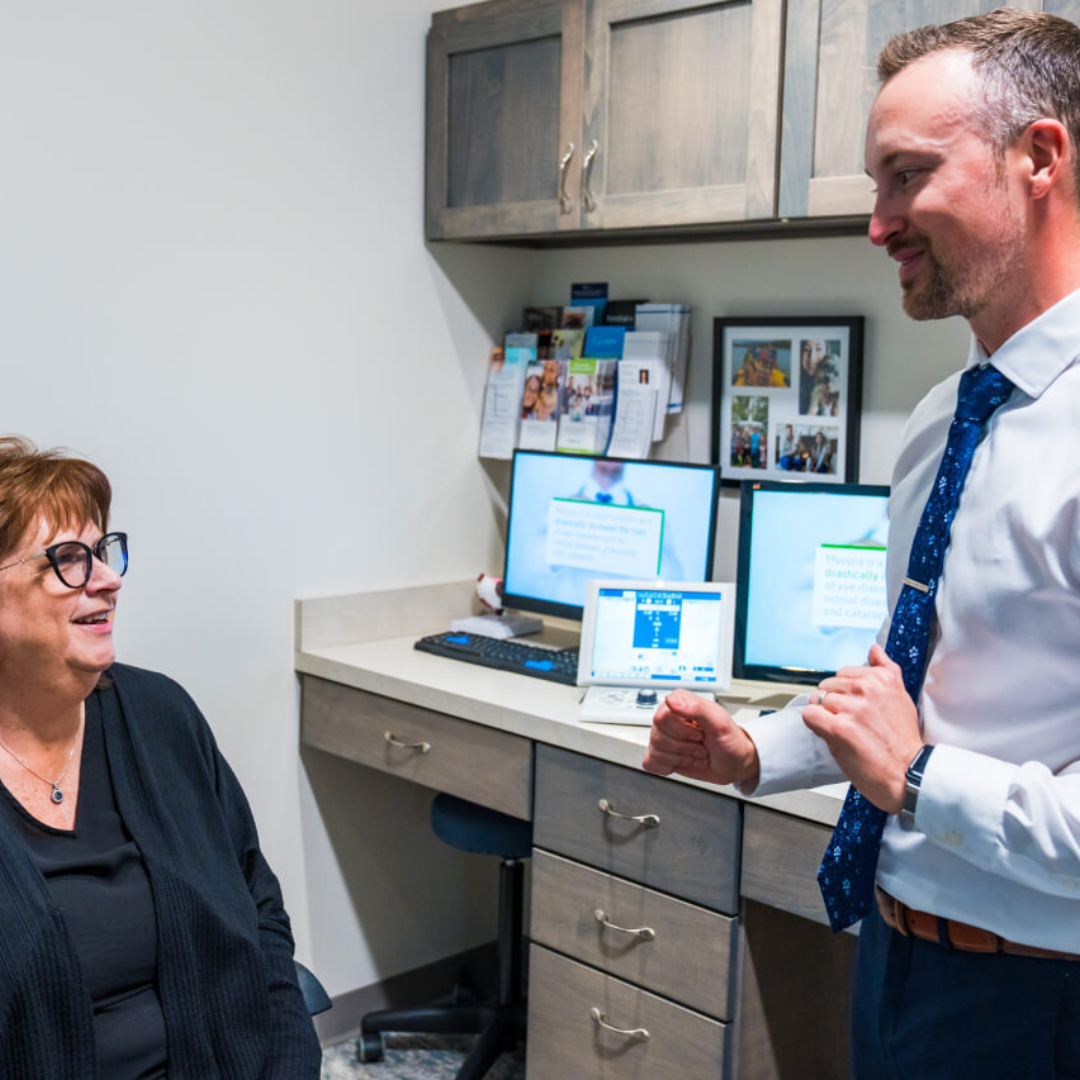
Your eyes can provide insights into your overall health. During an eye exam, our optometrists can detect signs of systemic conditions like diabetes, hypertension, and high cholesterol. Early detection of these issues can lead to prompt treatment and improved health outcomes.
Specialty Eye Exams

Pediatric

Contact Lens

Diabetic
Why Choose Us?
At VisionQuest Eyecare, we’ve been dedicated to nurturing the vision of patients in our community for over 25 years. We have the experienced team you and your family need to manage your eye health and keep you seeing clearly for years to come!
Recent News
What Kind of Lenses Help With Glare From Water or Screens?
Glare can make everyday activities much more frustrating than they need to be. Whether you notice it while looking at water on a bright day, working at a computer, or scrolling on your phone, the right eyewear can make a major difference. If you are searching for...
How Vision Affects School Performance
When a child struggles in school, parents often first think about attention, behavior, study habits, or curriculum. Vision is often overlooked. Yet many classroom tasks depend on strong visual skills, and even a mild issue can make reading, writing, focusing, and...
How Dry Winter Air Affects Your Eyes, and What You Can Do About It
How Dry Winter Air Affects Your Eyes, and What You Can Do About It Winter in Indiana has a way of sneaking up on your eyes. One day you feel fine, and the next your eyes feel scratchy, watery, or like there’s grit stuck under your eyelids. If that sounds familiar,...
Frequently Asked Questions
What happens during a comprehensive eye exam at VisionQuest Eyecare?
During your comprehensive eye exam at VisionQuest Eyecare, your technician and optometrist will review your health and vision history, test your visual acuity (how clearly you see), check your eye focusing and coordination, measure eye pressure, evaluate the health of your retina and optic nerve, and determine whether you need glasses or contacts.
The exam gives both a prescription (if needed) and a health check for conditions like glaucoma, macular degeneration, myopia, and other eye diseases.
How often should I have an eye exam?
For most adults (ages 18‑64) and children (ages 4 and up) with healthy vision and no risk factors, an annual exam is recommended.
If you have diabetes, high blood pressure, a family history of eye disease, or wear contacts, you may need exams more frequently, our doctors at VisionQuest Eyecare will advise you based on your individual needs. Read more about recommended pediatric exam times.
How long does an eye exam take at VisionQuest Eyecare?
A typical comprehensive eye exam takes about 30‑45 minutes, though new patients may need a little more time to complete paperwork and for the doctor to review your history.
If you combine your exam with frame selection, contact lens fitting, or additional testing, plan for a longer visit.
How do I schedule an appointment at VisionQuest Eyecare?
You can schedule online here or call either of our locations in Greenwood, IN (317-865-6829) or Fishers, IN (317-720-2020). We recommend booking ahead to secure your preferred time, but we also accept same day appointments when available.
If you have sudden vision changes, discomfort, flashes or floaters, please call us right away for an urgent appointment.
What should I bring to my first exam?
When you arrive, bring:
- Your current glasses or contacts (if you use them)
- A list of all current medications you are taking, not just the eye related ones (including over‑the‑counter)
- Your vision plan information (if you have one)
- Any previous prescription or eye‑health records, if available
Preparing this information helps us provide the most accurate care.
Will my eyes be dilated during the exam?
Dilation (using eye drops to widen the pupil) may be recommended to allow detailed examination of the retina and optic nerve. It’s not necessary for every patient every time.
If dilation is used, your eyes may be light‑sensitive and your near vision may be blurry for a few hours. Bring sunglasses and someone to take you home if needed.
Do you accept vision plans and what will my exam cost?
Yes, VisionQuest Eyecare accepts many major vision plans. Your coverage will depend on your specific plan, so we encourage you to provide your insurance details when you schedule to ensure coverage.
For patients without a vision plan, we offer other affordable options, call us for current pricing.
What if I only need a contact lens fitting?
If you are already a patient of ours with a recent exam on file, a contact lens fitting may be scheduled separately.
If you’re new, a full eye exam is typically required before a contact lens evaluation, so we can assess your eye health and ensure a safe contact lens fit.
Can I get a new glasses or contact lens prescription during the exam?
Yes, the prescription for glasses and/or contacts is normally part of the comprehensive eye exam. After testing your vision and eye health, the doctor will provide a prescription if needed and discuss with you frame or contact‑lens options.
If you only want eyewear without health concerns, let our staff know and we’ll tailor your visit accordingly.
What should I do if my vision changes suddenly?
If you experience sudden vision loss, severe eye pain, flashes of light, new floaters, or trauma to the eye, it may be a medical emergency. In these cases, go immediately to the nearest emergency room or call 911.
After emergency treatment, contact VisionQuest Eyecare to schedule a follow-up exam so our optometrists can help monitor your recovery and manage any ongoing eye health needs. We’re here to support your vision care before and after emergency situations.
At what age should children have their first eye exam?
The American Optometric Association recommends a child’s first eye exam at 6–12 months, again at 3 years, and then before starting kindergarten. Early exams help detect vision issues before they impact learning or development. Read more about the importance of early exams in our article: Why Vision Screening At School Aren’t Enough
After the first few visits, children should have a comprehensive eye exam every year, or more frequently if they wear glasses, have vision problems, or a family history of eye conditions. Read more: How Often Should You Really Get An Eye Exam?
How do I know if I need an optometrist versus an ophthalmologist?
At VisionQuest Eyecare, our optometrists provide comprehensive eye exams, prescribe glasses and contact lenses, and manage a wide range of eye conditions; including glaucoma, dry eye, diabetic eye disease, and macular degeneration.
If your condition requires surgery (such as cataract removal or retinal procedures), we’ll refer you to a trusted local ophthalmologist and coordinate your care. Our team handles everything else; including diagnosis, treatment, follow-up, and co-management; to ensure continuity and comfort throughout your care journey.
What types of tests are included in an eye exam?
Tests may include: visual acuity (reading eye chart), refraction (determining prescription), eye focusing/coordination, intraocular pressure (glaucoma screening), dilated retina/optic‑nerve exam, color vision, peripheral field testing, and retinal imaging when indicated. Our doctors will tailor the set of tests to your age, symptoms, risk factors and visual needs.
Can I use my FSA/HSA for an eye exam?
Yes, if you have a Flexible Spending Account (FSA) or Health Savings Account (HSA), you can often apply those funds toward your comprehensive eye exam, contact lens fitting, glasses and other eligible vision‑care services. Check with your benefits provider for details.
What if I don’t have vision symptoms, do I still need a routine exam?
Yes, regular exams are important even if you feel your vision is fine. Many eye diseases (glaucoma, retinal problems, early macular degeneration) show no symptoms in early stages. An exam gives you peace of mind and helps protect long‑term vision health.
How early should I arrive for my appointment?
What if I'm late or need to reschedule my appointment?
If you’re running late or need to reschedule, please call our office as soon as possible. We’ll do our best to accommodate your schedule. If you arrive very late, we may need to reschedule to keep on track for other patients.
Will my exam include screening for overall health issues?
Yes, in addition to vision correction, a comprehensive eye exam at VisionQuest Eyecare includes checking eye structures that may reveal signs of systemic health conditions such as diabetes or high blood pressure.
The eyes often give clues to broader health, so regular exams are beneficial beyond just vision. This is also why it is important to let your optometrist know of any and all pre-existing conditions and medications.
What if I need eyewear after my exam, can I pick frames at the same visit?
Absolutely, after your prescription is finalized, you may browse our eyewear selection at the same visit. At our Fishers and Greenwood locations, we offer a wide range of frames and lens‑options, and our staff will help guide you through coatings, lens types and pricing. This does not mean that you will be able to take glasses home the same day as well, as you will need to have your prescription lenses made. You can also read our article on finding frames for your face shape to better prepare you to pick your perfect frames.
How do I know when to come back for the next exam?
Your optometrist, as well as our scheduling team, at VisionQuest Eyecare will recommend a follow‑up interval based on your age, eye health, vision history and risk‑factors. For many adult patients with healthy vision it may be every 12 months; for others with eye disease, contacts, or systemic health issues it may be more frequent. You’ll also get reminders for scheduling your next visit.