
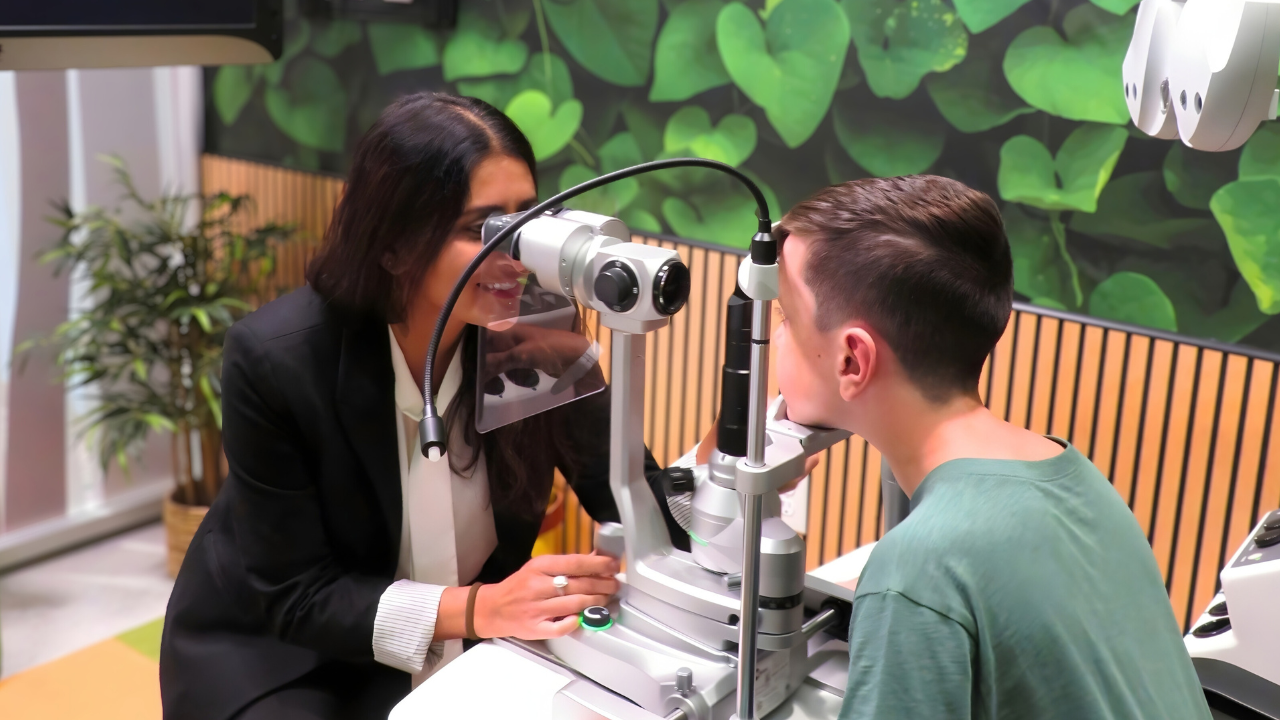
When a child struggles in school, parents often first think about attention, behavior, study habits, or curriculum. Vision is often overlooked. Yet many classroom tasks depend on strong visual skills, and even a mild issue can make reading, writing, focusing, and participating in class much harder than it should be.
For families in Greenwood and Geist, understanding how vision affects school performance can make a meaningful difference. A child who seems distracted, frustrated, or reluctant to read may actually be working much harder than expected because their eyes are not focusing, tracking, or working together properly. That is why early detection and comprehensive care matter.
Why vision matters in the classroom
A large part of classroom learning is visual. Children need to see the board, follow words across a page, shift focus from near to far, copy notes accurately, and stay comfortable during reading and screen time. When those visual skills are not working efficiently, school can feel frustrating and exhausting.
A child may understand the material but still fall behind because reading takes more effort, words may blur together, or near work leads to discomfort. Some children do not realize they are seeing differently because they assume their visual experience is normal.
This is one reason regular pediatric eye care is so important. Comprehensive care can help uncover vision concerns that may interfere with classroom success before they continue to affect a child’s confidence and performance.
Signs your child’s vision may be affecting school performance
Some children clearly say they cannot see the board. Others show more subtle signs that are easy to mistake for lack of interest or poor study habits. Parents and teachers may notice:
- Frequent headaches or eye fatigue after reading
- Losing their place while reading
- Squinting, tilting the head, or covering one eye
- Avoiding homework or becoming frustrated with schoolwork
- Trouble paying attention during near tasks
- Holding books or screens very close
These symptoms can point to more than a simple need for glasses. In some cases, they may suggest issues with eye teaming, focusing, or tracking. A comprehensive eye exam can help determine what is really going on.
Common vision problems that can impact learning
Not every school-related vision issue looks the same. Some children need corrective lenses for blurry distance vision. Others can pass a basic vision screening and still struggle with the visual skills needed for reading and learning.
One common concern is myopia, or nearsightedness. A child with myopia may have difficulty seeing the board or presentations clearly from across the room. Early treatment and monitoring through myopia management can help protect long-term visual health while supporting classroom performance.
Some children experience focusing problems. They may see well for a short period but have trouble keeping near vision clear during reading or homework. Others may struggle with eye tracking or eye teaming, which can make reading feel slow, tiring, and frustrating.
When visual function issues are affecting learning, vision therapy may be recommended. This type of care is designed to improve how the eyes and brain work together, which can help some children become more efficient and comfortable when reading and completing schoolwork.
Why school screenings are not enough
Many parents assume that if their child passes a school vision screening, everything is fine. Unfortunately, school screenings are limited. They often focus mainly on distance vision and may not detect issues related to focusing, tracking, coordination, or how the eyes work together.
That is why a comprehensive exam matters. Unlike a quick screening, a full evaluation looks at prescription needs, eye health, visual skills, and overall function. These are all important parts of a child’s ability to learn comfortably and effectively.
Parents who want to understand this difference more clearly can read why school vision screenings are not enough. It offers helpful insight into why a child may still struggle even after passing a screening at school.
How better vision can support better learning
When vision problems are identified and treated, many children experience meaningful improvements in daily school life. Reading may become easier. Homework may feel less overwhelming. Attention may improve because the child is no longer spending so much energy trying to compensate for visual strain.
Vision support can also help with confidence. A child who has been quietly struggling may feel relieved to understand why school has been harder than expected. Once the right treatment plan is in place, they often have a stronger foundation for learning and participation.
For parents, this can be a powerful reminder that academic struggles are not always about motivation or effort. Sometimes the issue begins with how a child is seeing the world around them.
Support your child’s success with VisionQuest Eyecare
If your child is showing signs of visual discomfort, falling behind in reading, or struggling with classroom endurance, now is a good time to take a closer look. VisionQuest Eyecare provides comprehensive services for families in Greenwood and Geist, including pediatric eye care, eye exams, myopia management, and vision therapy.
Early care can make a lasting difference in your child’s comfort, confidence, and academic progress. Vision problems do not always look like vision problems. Sometimes they show up as frustration, distraction, avoidance, or reduced performance at school.
Schedule your child’s appointment online with VisionQuest Eyecare or call one of our offices today. Online scheduling is a convenient option for busy families, and our team is here to help you find the right next step for your child’s vision and learning needs.
Common questions about how vision affects school performance
Can vision problems really affect how a child does in school?
Yes. Many school tasks rely on clear, comfortable, and efficient vision. If a child is having trouble seeing clearly, focusing, or tracking words on a page, it can affect reading, writing, attention, and overall classroom performance.
What are common signs that my child may have a vision problem?
Frequent headaches, eye rubbing, squinting, avoiding reading, holding books too close, losing place while reading, and frustration with schoolwork can all be signs that a child needs a comprehensive eye exam.
If my child passed a school screening, do they still need an eye exam?
Yes. School screenings are helpful, but they are limited. They may miss important issues related to focusing, eye teaming, tracking, and overall visual function that can still affect school performance.
Can vision therapy help with reading and learning struggles?
In some cases, yes. Vision therapy may help children who have issues with eye coordination, tracking, and visual processing that make reading and schoolwork more difficult.
When should I schedule an appointment for my child?
You should schedule an appointment if your child complains about vision, avoids near work, struggles with reading, or shows signs of eye strain or fatigue. Early evaluation can help identify problems before they continue affecting performance in school..

Dr. Anjali Shah is an optometrist at VisionQuest Eyecare with a passion for helping others. She graduated from the State University of New York College of Optometry, with advanced training in pediatrics and ocular diseases through her internship and residency. She is a national speaker in the field of myopia management, qualified to prescribe advanced myopia management treatments to slow the condition’s progression.